Route 66 (Flagstaff & Williams)

  • Home
  • Historic Sites
  • Route 66 (Flagstaff & Williams)

Route 66 (Flagstaff & Williams)

  • Home
  • Historic Sites
  • Route 66 (Flagstaff & Williams)

Route 66 (Flagstaff & Williams)

Running through northern Arizona, Route 66 shaped twentieth-century travel, commerce, and culture. Neon signs, motels, and diners tell the story of migration, tourism, and the open road.
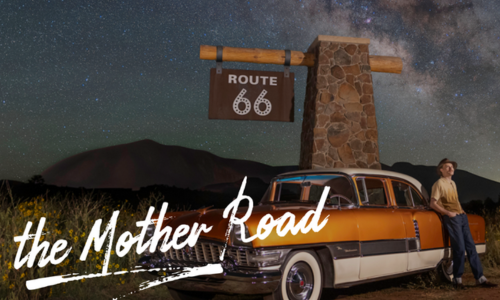
Route 66, officially designated U.S. Highway 66, is a historic American highway stretching about 2,400 miles from Chicago, Illinois, to Santa Monica, California. Established in 1926, it became known as the “Mother Road” and “Main Street of America”, symbolizing freedom, migration, and the rise of automobile culture. Though decommissioned in 1985, it remains a celebrated cultural icon and travel destination.
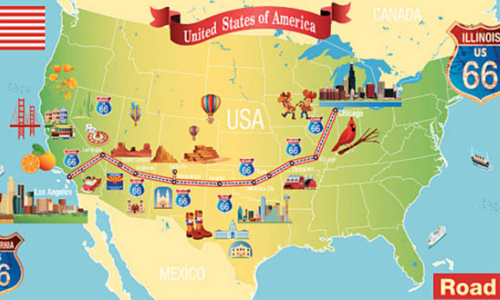
Key facts

  • Established: 1926
  • Decommissioned: 1985
  • Length: ~2,400 miles (3,862 km)
  • Endpoints: Chicago, Illinois – Santa Monica, California
  • Nicknames: “Mother Road,” “Main Street of America”

History and significance

Route 66 was conceived as part of the original U.S. Highway System, connecting rural communities to major cities. During the Dust Bowl of the 1930s, it served as an escape route for migrants heading west, a journey immortalized in The Grapes of Wrath by John Steinbeck, who popularized the term “Mother Road.” The highway later fueled America’s postwar travel boom, lined with diners, motels, and neon-lit service stations that embodied mid-century roadside culture.
Travelers today retrace Route 66’s path through eight states—Illinois, Missouri, Kansas, Oklahoma, Texas, New Mexico, Arizona, and California—visiting preserved landmarks such as:
  • Cadillac Ranch (Texas): Half-buried, graffiti-covered Cadillacs
  • Blue Whale of Catoosa (Oklahoma): A playful waterfront sculpture
  • Route 66 Museum (Clinton, Oklahoma): Exhibits chronicling the road’s cultural era
  • Chain of Rocks Bridge (Missouri): A 1929 bridge famous for its sharp bend
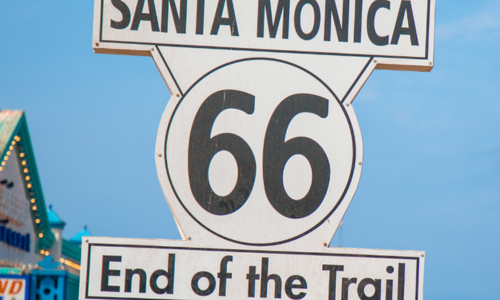
  • Santa Monica Pier (California): The symbolic “End of the Trail”

Preservation and tourism

Although bypassed by modern interstates, Route 66’s legacy endures through community restoration projects, museums, and festivals. More than 250 sites along its course are listed on the National Register of Historic Places, supported by programs of the National Park Service and the Route 66 Corridor Preservation Program. Today it draws millions of international visitors each year seeking to experience a nostalgic slice of Americana and the enduring romance of the open road.