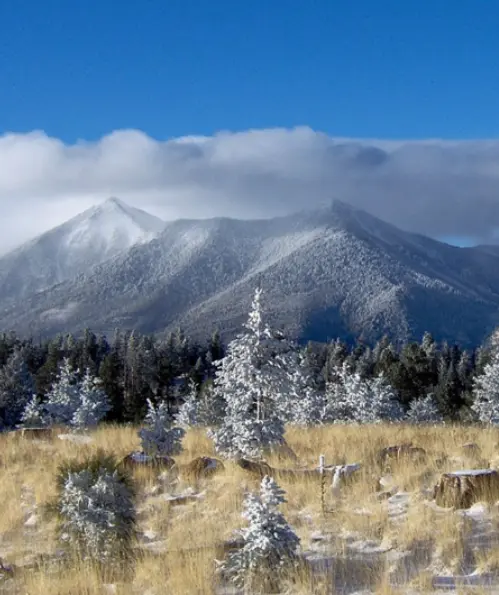
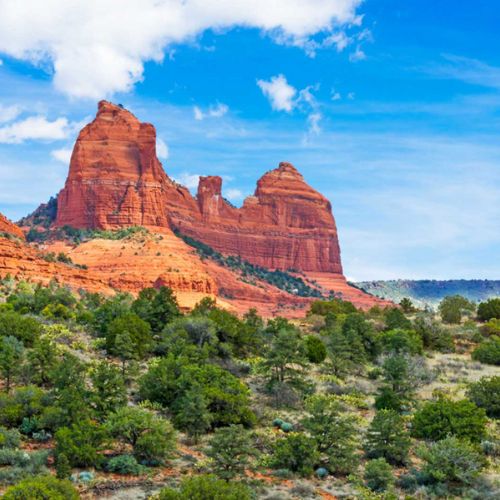
Coconino County is a land of superlatives. As the second-largest county in the contiguous United States, its history unfolds across a dramatic and layered landscape. Here, the land rises from the ancient metamorphic rock exposed at the bottom of the Grand Canyon to the 12,633-foot volcanic peaks of the San Francisco Range. These extremes are not just geographic but historical, preserving stories that stretch back thousands of years and continue to shape the present.
Long before the arrival of railroads, ranchers, or sawmills, this was and remains a sacred landscape. For over a millennium, the Havasupai, Hopi, Navajo, Paiute, and Hualapai peoples have lived in relationship with this land. Their ancestral homes, trade routes, agricultural practices, and ceremonial traditions form the foundational layer of Coconino County’s history. Many sites across the region still carry cultural and spiritual significance today, reminding us that this history is living, not confined to the past.
The Era of Iron and Pine
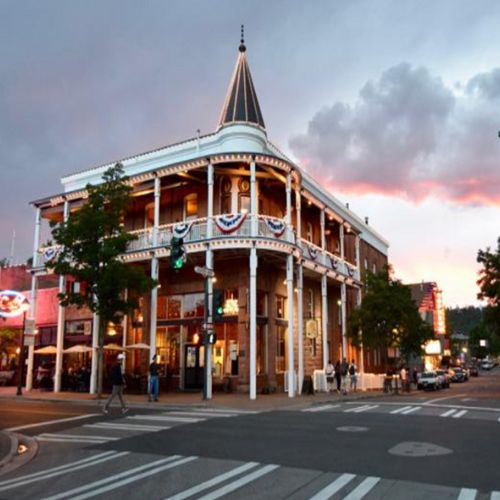
In the late nineteenth century, Coconino County entered a period of rapid transformation. The arrival of the Atlantic and Pacific Railroad linked the High Country to national markets and reshaped settlement patterns almost overnight. Towns like Flagstaff and Williams grew alongside the booming lumber industry, where the scent of fresh-cut pine became synonymous with opportunity and survival. At the same time, ranching expanded across open grasslands, with families like the Babbitts building enterprises that helped define the county’s economic and social landscape for generations.
A Gateway to the Stars and the World
Coconino County has always looked both upward and outward. In 1894, Percival Lowell established what would become the Lowell Observatory, drawn by the region’s clear skies and high elevation. This pursuit of knowledge led to the discovery of Pluto in 1930 and cemented the county’s role in astronomical research. By the mid-twentieth century, another kind of exploration passed through on the ground. Decades later, Route 66 turned towns across northern Arizona into landmarks of the American road trip, filling the region with neon signs, roadside diners, and travelers chasing the promise of the open road, connecting local history to a national narrative.
Past, Present, and Preservation
Today, Coconino County stands at the intersection of preservation and progress. Visitors and residents alike can trace the footsteps of Indigenous communities, pioneers, scientists, and astronauts. From the volcanic terrain where Apollo astronauts once trained to ongoing efforts to protect cultural sites and fragile ecosystems, the county continues to balance growth with stewardship. In doing so, Coconino County offers not just a history to study, but a place where the past and present remain deeply intertwined. By understanding the people and places that shaped the High Country, we honor its past while shaping a more informed future.