Antelope Canyon

  • Home
  • Historic Sites
  • Antelope Canyon

Antelope Canyon

  • Home
  • Historic Sites
  • Antelope Canyon

Antelope Canyon

Antelope Canyon is a renowned slot canyon located east of Page, Arizona within the Navajo Nation. Carved into Navajo Sandstone by centuries of flash flooding and wind, it is famous for its narrow, winding passageways and shifting beams of sunlight that illuminate its smooth, wave-like walls. Managed by the Navajo Parks and Recreation Department, the canyon is accessible only through guided tours.

Key Facts

  • Location: LeChee Chapter, Navajo Nation, near Page, Arizona
  • Formed by: Erosion from flash floods over millions of years
  • Main sections: Upper Antelope Canyon (“The Crack”) and Lower Antelope Canyon (“The Corkscrew”)
  • Access: Guided tours only (permit required)
  • Best viewing: March–October, around midday for Upper Canyon light beams

Geology and Formation

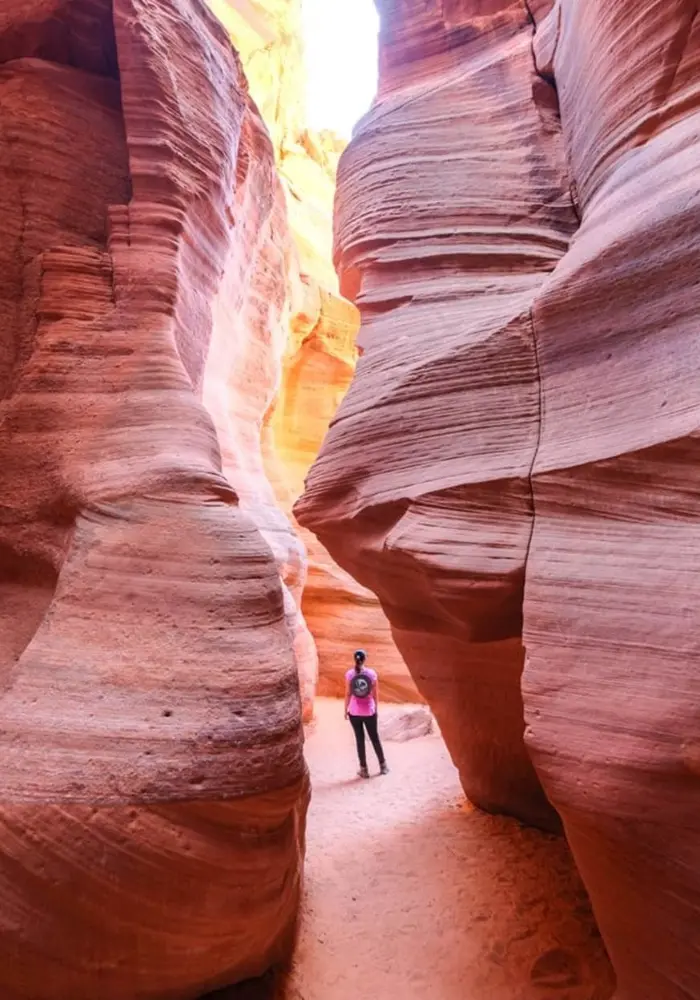
Antelope Canyon was sculpted within layers of Navajo Sandstone through a mix of hydraulic and aeolian erosion. Seasonal floods, especially during the Arizona monsoon, funneled sediment-laden water through narrow cracks, gradually deepening and smoothing the rock. The result is a curving corridor of red and orange sandstone, sometimes only a few feet wide yet over 100 feet deep, exemplifying the classic “slot canyon” form found across the Colorado Plateau.

Upper Antelope Canyon

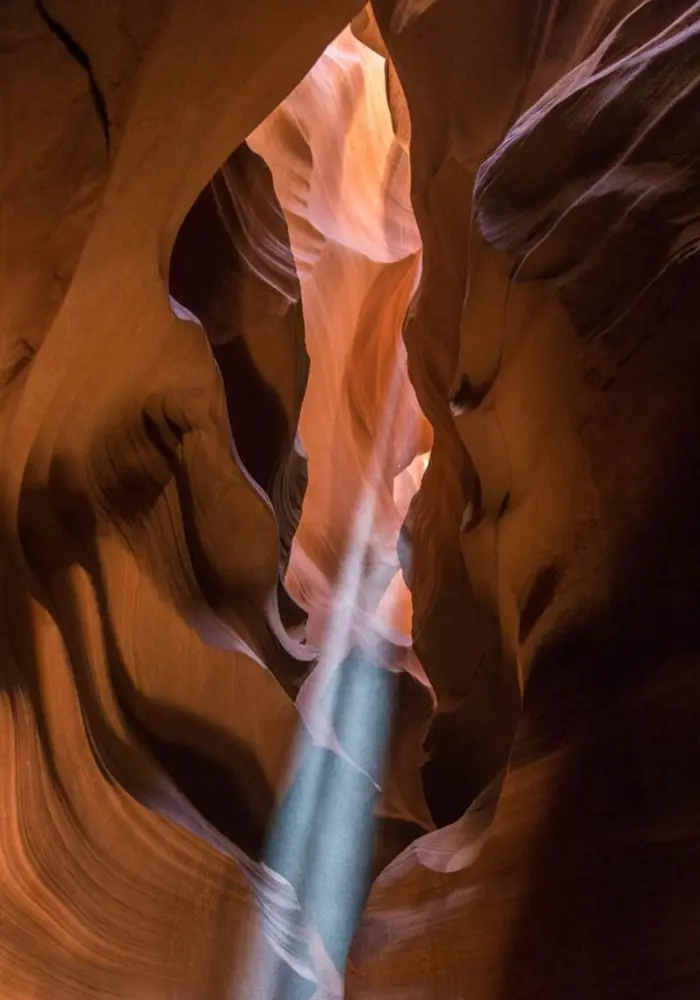
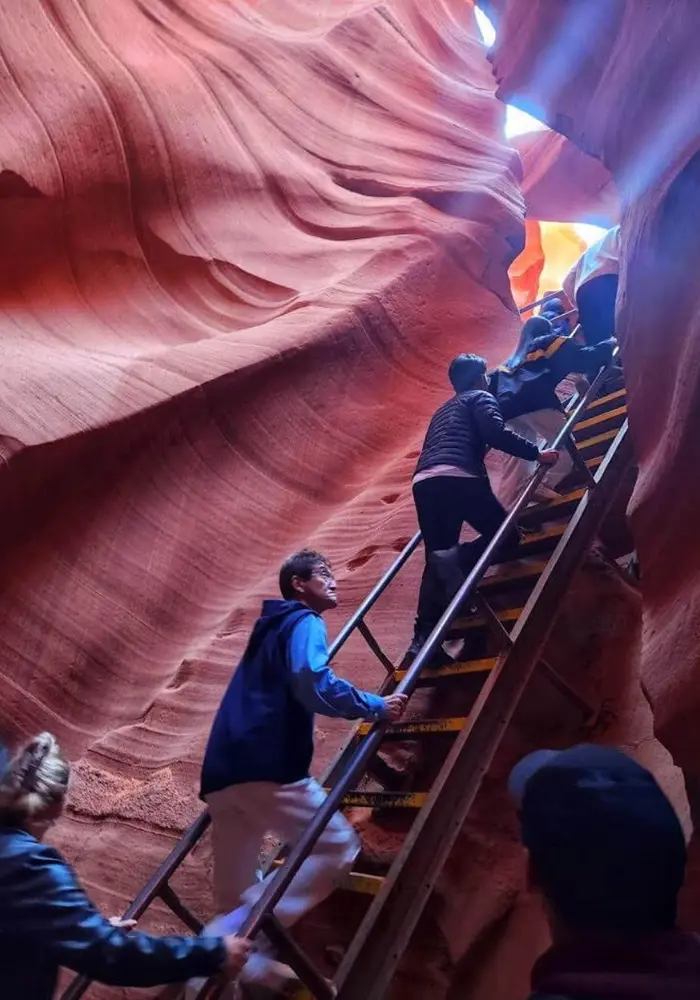
Tsé bighánílíní in Navajo (“the place where water runs through rocks”), has a flat sandy floor and is accessible at ground level. It is noted for its photogenic light shafts that appear from late morning to early afternoon. Lower Antelope Canyon, Hazdistazí (“spiral rock arches”), is longer and narrower, requiring visitors to navigate metal stairways and ladders. Both sections display distinctive patterns of sculpted rock and vibrant light.

Cultural and visitor significance

The canyon is sacred to the Diné (Navajo) people and serves as a source of cultural identity and economic support for local communities. Following a fatal flash flood in 1997, visitor access was restricted to small, guided groups to enhance safety and preserve the fragile environment. Today, tours educate visitors about Navajo traditions and geology while maintaining strict limits on group size and photography equipment to protect the site.

Visiting and safety

Tours typically last about 60–90 minutes and are offered year-round by Navajo-owned operators from Page. Visitors should book well in advance, as capacity is limited. Flash flooding remains a monitored hazard, particularly between July and September. The canyon lies within the Mountain Time Zone and observes Daylight Saving Time, unlike most of Arizona, an important detail for tour timing.
Antelope Canyon remains one of the American Southwest’s most photographed natural landmarks, embodying the dynamic interplay of light, stone, and cultural reverence.