Grand Canyon

  • Home
  • Historic Sites
  • Grand Canyon

Grand Canyon

  • Home
  • Historic Sites
  • Grand Canyon

Grand Canyon

Far more than a natural wonder, the Grand Canyon is a cultural landscape shaped by Indigenous communities for thousands of years. Villages, trails, and sacred sites throughout the canyon reflect deep, ongoing connections to the land.
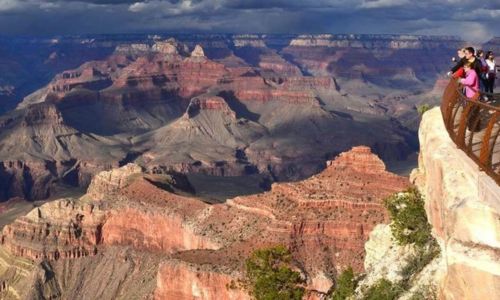
The Grand Canyon is a vast geological gorge carved by the Colorado River in northern Arizona, protected within Grand Canyon National Park. Extending 277 miles (446 km) long and over a mile deep, it reveals nearly two billion years of Earth’s geologic history and draws millions of visitors annually as one of the world’s most celebrated natural wonders.

Key facts

  • Location: Northern Arizona, USA
  • Depth: Up to 6,093 ft (1,857 m)
  • Length: About 277 mi (446 km)
  • Established as National Park: 1919
  • UNESCO World Heritage Site: 1979

Geology and formation

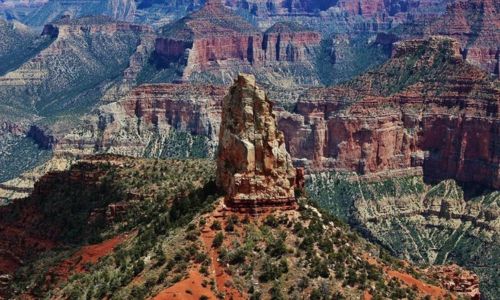
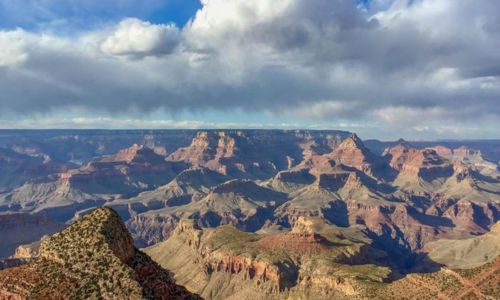
The canyon exposes rock layers spanning from ancient Vishnu Schist to younger Kaibab Limestone. Over millions of years, the Colorado River incised these strata through uplift of the Colorado Plateau and erosional forces of wind and water. The result is an immense sequence of colorful cliffs, mesas, and buttes that provide scientists a continuous geologic record stretching back nearly two billion years.

Main rims and viewpoints

The South Rim, open year-round, is the most visited area, with accessible overlooks such as Mather, Yavapai, Moran, and Grandview Points. The North Rim, higher and cooler, operates seasonally from mid-May to mid-October and features vistas like Point Imperial and Cape Royal. Shuttle routes and the 23-mile Desert View Drive link major viewpoints, while the historic Grand Canyon Village offers lodging and visitor services.
Activities and attractions

Popular experiences include hiking the Rim Trail or the steep Bright Angel and South Kaibab Trails, white-water rafting the Colorado River, and viewing sunrise or sunset across the layered cliffs. Architectural landmarks such as the Desert View Watchtower and El Tovar Hotel reflect the park’s early-20th-century tourism heritage. Ranger programs and scenic drives deepen visitor understanding of the canyon’s ecology and Indigenous history.

Conservation and significance

Administered by the U.S. National Park Service, the park protects over 1.2 million acres of diverse ecosystems ranging from desert scrub to conifer forest. Beyond its scenic value, the Grand Canyon remains a sacred landscape for multiple Native American tribes and a globally important site for research, education, and inspiration.