Horseshoe Bend

  • Home
  • Historic Sites
  •  Horseshoe Bend

 Horseshoe Bend

  • Home
  • Historic Sites
  •  Horseshoe Bend

Horseshoe Bend

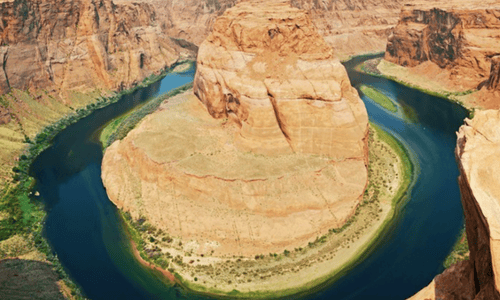
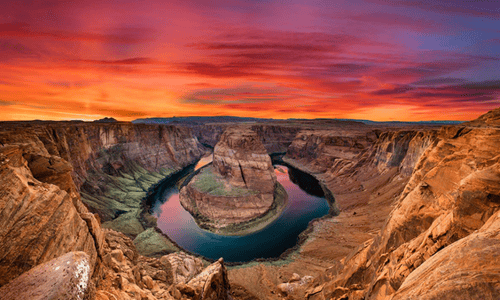
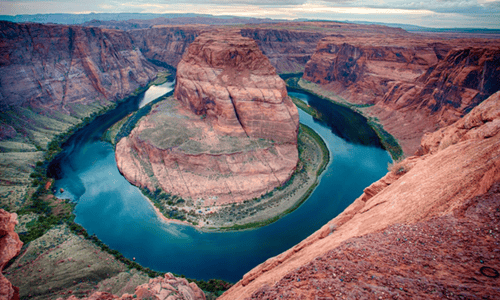
Horseshoe Bend is a dramatic overlook of a 270-degree meander in the Colorado River, located just south of Page, Arizona within Glen Canyon National Recreation Area. Rising roughly 1,000 feet (305 m) above the river, its sweeping sandstone amphitheater has become one of the most photographed natural vistas in the American Southwest.

Key facts

  • Location: 5 mi (8 km) south of Page, Arizona
  • Elevation: ~4,200 ft (1,280 m) above sea level
  • Trail length: 0.75 mi (1.2 km) one way, paved and ADA-compliant
  • Managed by: City of Page & U.S. National Park Service
  • Parking fee: $10 per car (City of Page lot, 2024)

Geology and formation

Over millions of years, uplift of the Colorado Plateau allowed the Colorado River to carve deep into Navajo Sandstone, producing an entrenched meander shaped like a horseshoe. The vivid orange cliffs contrast with the emerald-green water below, revealing cross-bedded sedimentary layers from ancient desert dunes.

Visitor experience

The overlook is reached via a gently graded, partially shaded trail from a paved parking area off U.S. 89. A fenced platform built in 2018 provides safe viewing, though visitors can explore additional vantage points along the rim. The site is open from sunrise to sunset year-round and offers exceptional sunrise and sunset photography. Temperatures can exceed 100 °F (38 °C) in summer, so water and sun protection are essential.

Accessibility and amenities

The hardened trail meets ADA standards, with two rest shelters and interpretive signage. Restrooms and a water refill station are located at the trailhead. Pets on leash are permitted. The overlook itself is unlit at night; the parking area closes at sunset. Drones are prohibited within Glen Canyon National Recreation Area.

Tourism and significance

Once a quiet roadside stop, Horseshoe Bend’s visibility on social media in the 2010s transformed it into a global destination, attracting over two million annual visitors. Revenue from parking fees funds trail maintenance and safety improvements. Its proximity to Antelope Canyon, Lake Powell, and the Grand Canyon makes it a cornerstone of Northern Arizona itineraries.