Wupatki National Monument

  • Home
  • Historic Sites
  • Wupatki National Monument

Wupatki National Monument

  • Home
  • Historic Sites
  • Wupatki National Monument

Wupatki National Monument

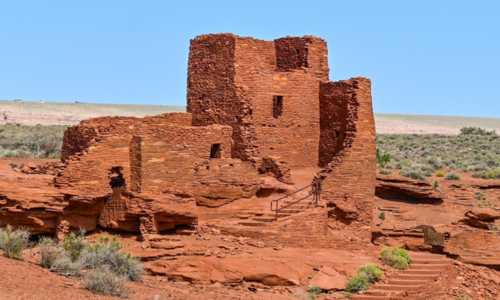
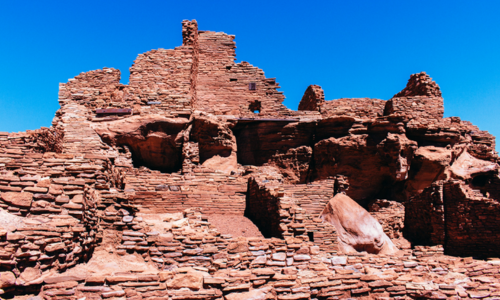
Once a thriving crossroads of trade and culture, Wupatki features multi-story pueblos built from red sandstone. The site highlights how Indigenous communities adapted to volcanic landscapes and changing environments.
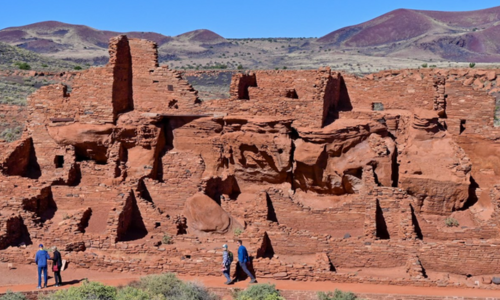
Wupatki National Monument is a protected archaeological site and desert landscape in northern Arizona, near Flagstaff. It preserves the remains of prehistoric pueblos built by Ancestral Puebloan peoples and showcases the intersection of ancient human habitation with the rugged terrain of the Colorado Plateau.

Key facts

  • Location: Coconino County, Arizona, USA
  • Established: December 9, 1924
  • Managed by: National Park Service
  • Area: Approximately 56 square miles (145 km²)
  • Notable sites: Wupatki Pueblo, Wukoki, Citadel, and Lomaki ruins

Archaeological significance

The monument protects over 2,700 recorded archaeological sites, dating mainly between 1100 and 1250 CE. The Wupatki Pueblo, the largest structure, contains more than 100 rooms, a ball court, and a community room. These pueblos were built primarily by the Sinagua culture, who were influenced by and traded with neighboring Hopi, Zuni, and Ancestral Puebloan groups.
Cultural and historical context

After the eruption of nearby Sunset Crater Volcano around 1085 CE, volcanic ash enriched the soil, drawing agricultural settlers into the region. The communities developed distinctive masonry architecture and adapted to the arid climate through dry farming and complex social networks. By the late 13th century, most sites were abandoned, possibly due to drought and social shifts.

Landscape and environment

Wupatki lies within the high desert of the Colorado Plateau, where red sandstone outcrops, grasslands, and sparse juniper forests dominate. The area’s dramatic vistas reveal the intersection of natural and cultural heritage, with proximity to both Sunset Crater Volcano National Monument and Grand Canyon National Park. Its geology reflects both volcanic and erosional processes that have shaped the surrounding environment.

Preservation and visitor experience

Today, Wupatki National Monument offers trails connecting several ancestral dwellings, educational exhibits, and ranger programs that interpret Indigenous history and archaeology. The site is jointly managed with Sunset Crater Volcano National Monument, providing a holistic view of the region’s cultural and geological legacy.